

Farmers urged to take advantage of free chemical disposal
9 Feb 2016
When it comes to tackling on-farm environmental issues, “free” is not a word that farmers or growers often hear. But that’s exactly what Agrecovery Rural Recycling is offering the Waikato rural community: free or subsidised collection and disposal for many unwanted or expired agrichemicals.
“We are able to provide this service largely free of charge due to the financial support of our 64 manufacturers and distributors, plus contributions from Waikato Regional Council,” says Jason Richards of Agrecovery.
To take advantage of the collection, users of agrichemicals should book these by 25 March via the Agrecovery website.
“While we can’t guarantee all booked chemicals will be free or subsidised, our funding tends to cover the majority of bookings.”
Richards says that more than 75,000kg of potentially harmful chemicals have been collected over the last seven years.
“Typically we hear from farmers who are leaving a property and need to get rid of expired products, or new owners who find unknown chemicals in sheds.
“There is also a large portion of users who simply don’t want to leave unwanted chemicals lying around; they want them safely disposed of.”
In 2014/2015 financial year, more than 3,000kg of agrichemicals were collected from the Waikato, making up around 13% percent of the national volume.
“Despite the large volumes collected over the years, we know there are still properties with unwanted chemicals,” says Richards.
“We’d like to see those farmers and growers follow their neighbours’ lead and book them in for our upcoming collection.”
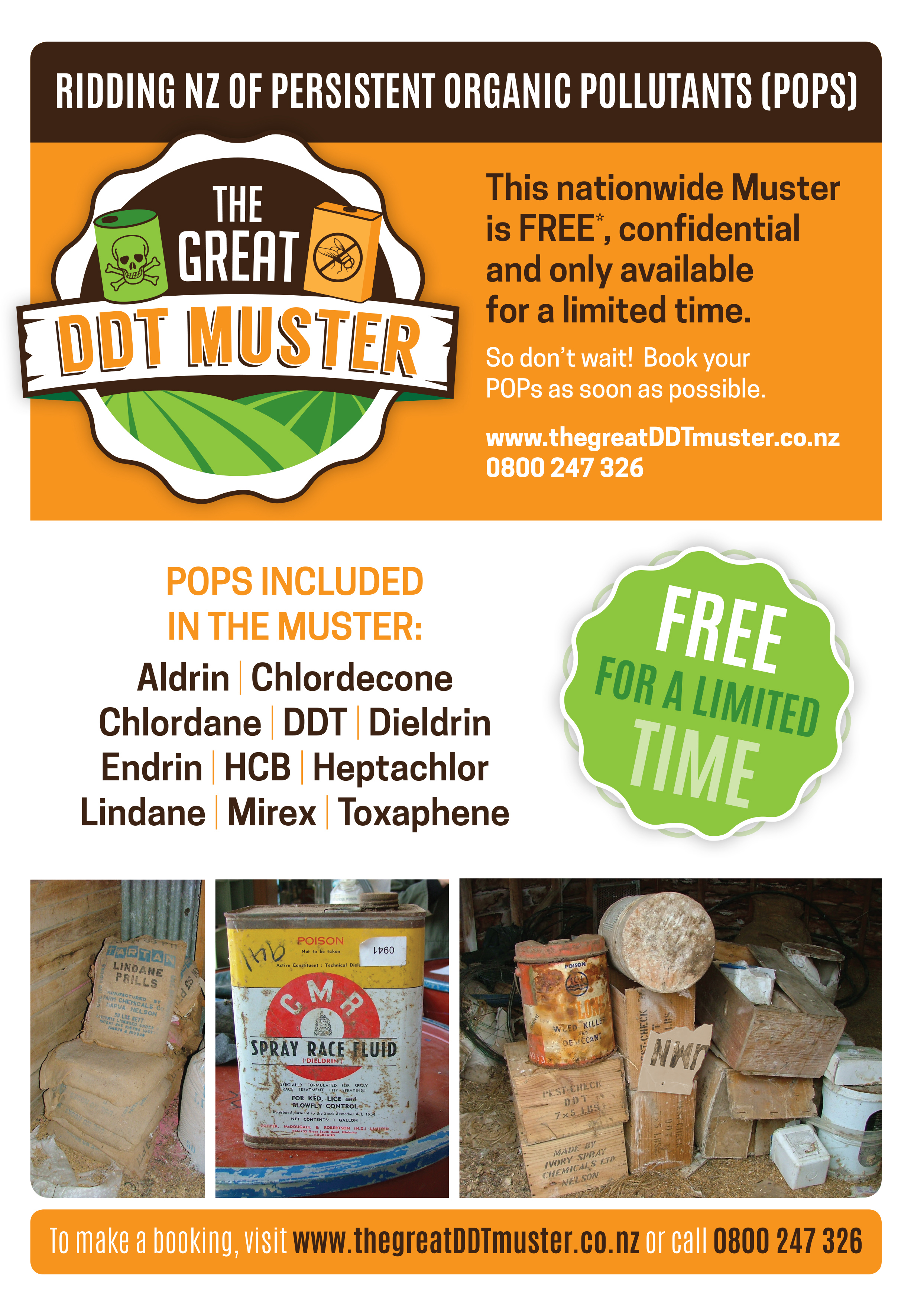
Another service providing free chemical collection is The Great DDT Muster which specifically collects persistent organic pollutants (POPs), such as DDT and Lindane.
POPs were widely used in the 1950-1970’s but have since been banned from sale and use due to their known health risks.
The Muster, which aims to rid New Zealand properties of POPs, is free, confidential and available for a limited time.
Chemicals for both Agrecovery and The Great DDT Muster can be booked via www.agrecovery.co.nz and will be collected at the same time.
Both programmes are easy to use, safe and fully compliant, offering a fully auditable record of disposal which farmers and growers can use for New Zealand GAP and other quality assurance programmes. To learn more visit www.agrecovery.co.nz or www.thegreatddtmuster.co.nz